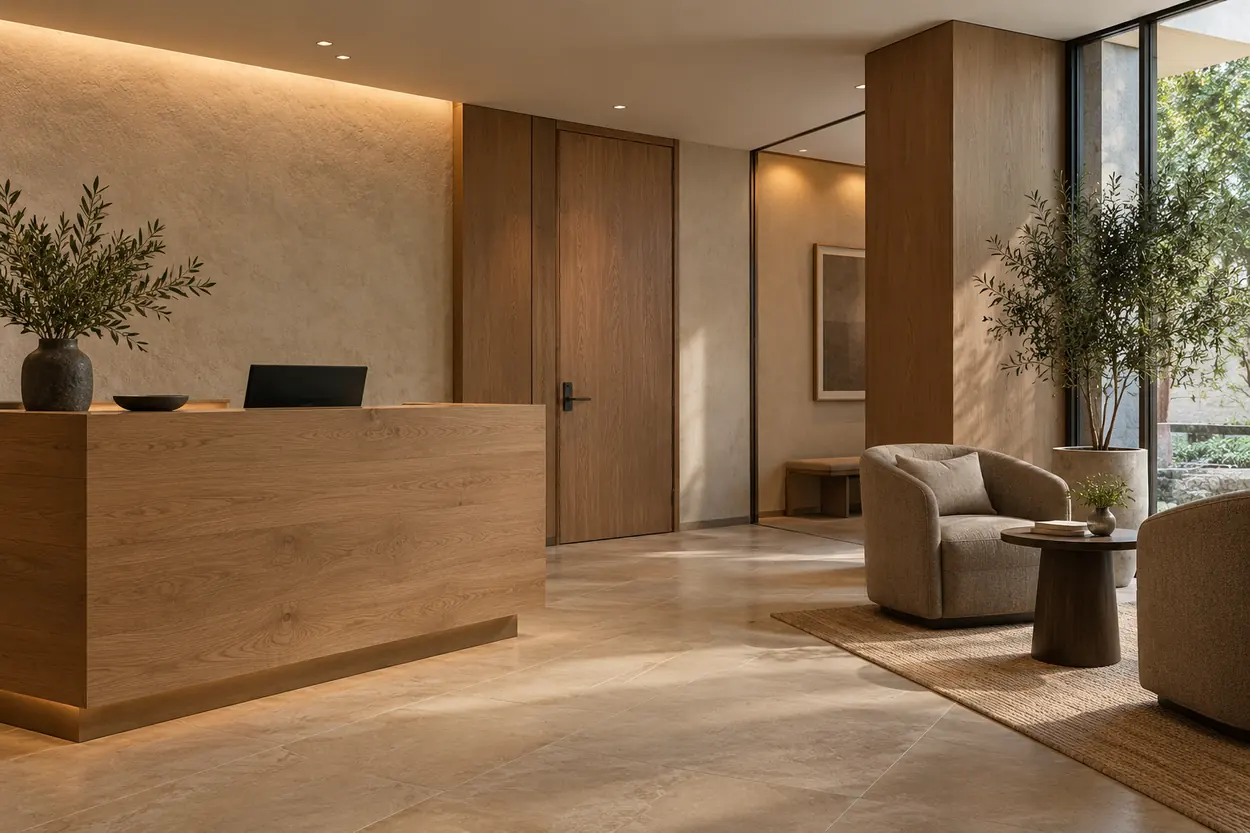
A commercial space can feel polished without relying on extravagant finishes or an oversized renovation budget. Often, the difference comes from smaller decisions: how lighting works with the interior, whether hardware feels substantial, how easily people move through the space, and whether practical areas get the same design attention as the main customer-facing rooms.
This applies to offices, hotels, restaurants, retail properties, medical facilities, and other spaces where people interact with a business in person. Visitors may not consciously identify every design choice, but those details can influence whether a property feels comfortable, organized, and well-maintained.
Across Texas, businesses operate in a wide range of commercial environments, from established downtown buildings to newer retail centers, hospitality properties, medical facilities, and mixed-use developments. That variety makes it important to think about both appearance and everyday performance when planning an interior.
The Details That Shape the Overall Experience
San Antonio is a good example of this diverse commercial environment. The city combines tourism and hospitality with healthcare, retail, offices, restaurants, and expanding residential areas. Different property types have different demands, but all benefit from spaces designed for regular use.
Restrooms are one area where practical decisions can have a noticeable effect. Materials must handle frequent use and cleaning while still matching the surrounding interior. Privacy, layout, accessibility, and ease of maintenance also matter.
For businesses planning a renovation or new commercial build, toilet partition vendors in San Antonio can help compare materials, configurations, finishes, and installation requirements. Deciding early can also help coordinate the restroom with flooring, lighting, fixtures, and other interior elements.
Materials That Balance Style and Durability
Material selection can significantly change a commercial restroom’s character. Stainless steel can create a clean, contemporary appearance, while powder-coated steel offers a practical solution for many busy facilities. Solid plastic and phenolic materials may also be suitable where moisture resistance and durability are priorities.
The right choice depends on the property, not a single definition of luxury. A material that works well in a hotel may not be the most practical option for a high-traffic retail environment.
Consider maintenance at the same time. Commercial interiors must look presentable long after installation, and easy-to-clean finishes make that goal easier to maintain.
Accessibility Is Part of Good Design
A premium commercial environment should also be comfortable and usable for a broad range of visitors. Accessibility is therefore part of thoughtful design, not something to address only after the main layout is complete.
Businesses can review accessibility standards when planning facilities that need to accommodate people with different mobility requirements. Considering these requirements early can make it easier to create a practical layout while avoiding unnecessary changes later.
The design process can also benefit from considering how people actually move through the room. Door swings, clearances, fixture placement, and circulation all contribute to how intuitive a space feels.
Small Choices That Improve Comfort
Privacy is another detail that can affect a restroom’s quality. Partition configuration, door placement, hardware, and the relationship between individual stalls can all affect how comfortable the space feels.
Lighting deserves similar attention. A room can have attractive finishes but still feel uninviting if the lighting is harsh, poorly positioned, or inconsistent with the rest of the property.
The U.S. Access Board provides additional information about accessible toilet rooms, including design considerations that can influence usability and planning.
Beyond accessibility, smaller elements such as faucets, mirrors, dispensers, and door hardware can help create a consistent visual language. When these features work together, the room feels more intentional, not assembled from unrelated components.
Premium Does Not Have to Mean Extravagant
There is a difference between making a commercial property feel premium and filling it with expensive features.
Often, the stronger approach is consistency. A durable partition finish that complements the walls, hardware that works with other fixtures, appropriate lighting, and an efficient layout can produce a more refined result than a collection of costly but unrelated products.
The same principle applies throughout the building. When you select practical elements with the overall design in mind, they become part of the experience rather than distractions.
Conclusion
The details that make a commercial space feel premium are often the ones visitors barely notice consciously. Good lighting, durable materials, thoughtful layouts, privacy, accessibility, and coordinated finishes all contribute to the impression a property leaves behind.
Businesses do not need to overcomplicate the process. By considering how each element will look, perform, and work with the rest of the space, they can create commercial environments that feel more considered from the moment visitors walk through the door.