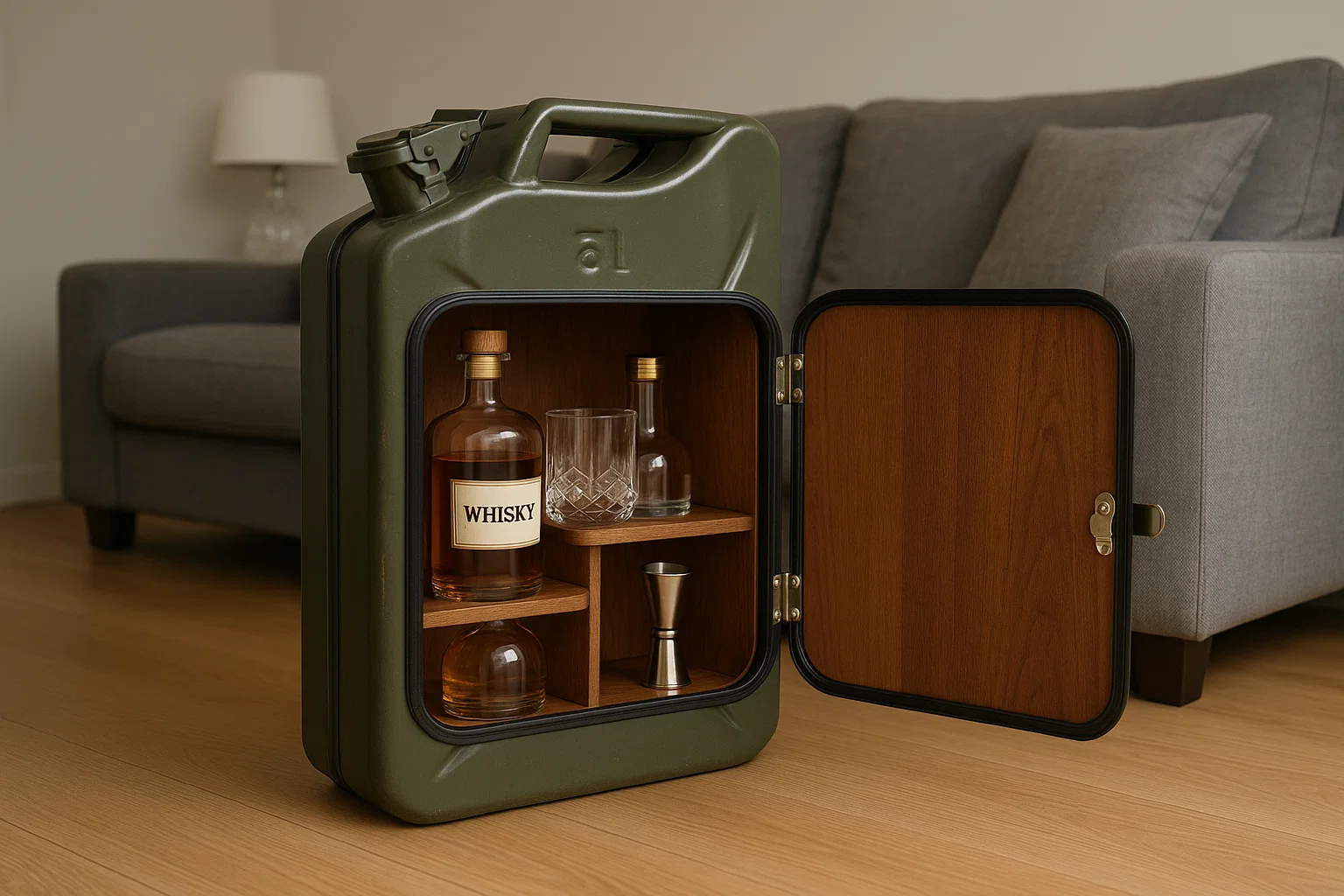
Steel cans once rattled on wartime trucks and tank transporters. Today the same silhouette hides whisky bottles and crystal glass in design focused homes.
A jerrycan looks simple yet it shaped modern warfare and later garage culture and home bars. This is the unlikely life story of the classic metal can.
Born for War
In the nineteen thirties German planners knew engines win campaigns only if fuel keeps flowing. Old fuel tins leaked split and slowed every move at the front.
Engineers created a new twenty litre standard can for the armed forces. It had to be tough easy to carry quick to pour and cheap to build in huge numbers.
Pressed steel halves formed a rounded shell with one strong weld around the middle. Cross shaped ribs stiffened the walls and let the metal flex instead of tearing.
Design that serves the front
A flip top spout with built in air channel gave a clean smooth flow. Inside a special coating allowed the same can to hold either petrol or drinking water.
The three part handle turned one can into many options. One soldier could carry two at once two soldiers could form a fast chain and empties nested together.
Nothing on the can was decorative. Every line came from hard use in mud cold and heat yet the finished object had a quiet functional beauty.
Copied by the Enemy
British forces entered the war with thin four gallon tins that soldiers called flimsies. In desert heat and on rough tracks they buckled leaked and sometimes burst.
When British units captured German fuel dumps they found cans that did not split or seep. Crews kept the best ones for themselves and hunted more at every chance.
News of the superior cans reached American engineers. They copied the design with small changes and soon millions of robust metal cans moved with Allied convoys.
A quiet hero of logistics
Fuel often made up roughly half the weight of supplies sent to some fronts. Without a container that could be stacked rolled thrown and dropped the war would stall.
The humble jerrycan rarely appears in heroic stories. Still many historians see it as one of the quiet industrial tools that helped mechanised armies stay in motion.
From Surplus to Symbol
Peace left mountains of surplus gear. Trucks and tanks were scrapped or sold and endless rows of fuel cans drifted out to farms workshops and small transport firms.
Farmers used them for diesel water and feed. Mechanics stacked them beside workbenches. Early overlanders strapped them to Jeeps and Land Rovers and chased far horizons.
Copies soon appeared from the Soviet Union and many other countries. Variants of the same basic can still ride on pickup trucks and military vehicles around the world.
A new kind of icon
Over time the can became a visual symbol for range and self reliance. A vehicle with two red cans on the rear door hints at long roads and nights under open sky.
A pile of dented grey cans in a corner of a shed tells another story. Each scrape or bend recalls some hurried refuelling stop or a hard landing off a truck.
Colour Codes and Small Rituals
To keep soldiers safe under pressure armies used simple colour codes. Red cans usually marked petrol while black cans often held diesel for engines and heaters.
Grey or blue cans could carry kerosene and white cans sometimes kept oils or lubricants. Embossed markings and stencils backed up the colour code when paint wore away.
Filled correctly a can holds a small air pocket under the handles. That space lets the liquid expand in heat and helps the can float if it falls into water.
Details that reward a closer look
The wide mouth and cam lever cap open fast even for cold tired hands. No loose cap no separate funnel just flip lift and pour when every second really matters.
Users added their own rituals. Many drivers swear by favourite ways to stack cans for balance and to secure them so the load stays quiet on rutted tracks.
Upcycling an Old Warrior
Decades later designers looked at the familiar outline and saw new potential. The shape is perfect for a compact cabinet and the triple handle invites a firm grip.
Companies now rescue battered steel cans then cut clean openings into the sides. They blast away rust refinish the shells and build new interiors with wood or metal.
A jerrycan bar holds bottles glass and tools behind a door with war time scars. Outside you read convoys and engines inside you find slow nights and good talk.
New lives in modern rooms
The same approach turns old cans into bathroom cabinets bedside tables and wall boxes. Each piece keeps its stamped numbers dents and weld marks as part of the story.
No two restored cans are truly alike. Some still show faint military markings while others carry layers of civilian paint from farms workshops and long forgotten trucks.
Why the Jerrycan Still Feels Modern
Most industrial objects from the nineteen thirties look rooted in their era. The jerrycan does not. Its clean surfaces and rounded corners still match modern gear.
The design follows one simple rule. Every feature must earn its place in real use. Triple handles ribs and rounded edges all exist because they survive hard treatment.
Standard shape and scale also matter. Because millions used the same can it became part of the visual language of war work travel and now interior design.
From Convoy to Cabinet
Today the jerrycan lives several parallel lives. It still works as a rugged fuel carrier. It appears in museums and war stories and now it glows softly in home bars.
Few artefacts travel this far without changing shape. From frozen airfields and desert tracks to tidy living rooms the metal can quietly keeps pouring fuel and stories.